What is a C-print — and why is digitizing it so important?
Many contemporary photography collections consist to a significant extent of C-prints. Yet outside specialist circles, the process is little known — and its specific properties, above all its aging behavior, are often underestimated even by experienced collectors.
Anyone archiving, lending, or having C-prints reproduced should understand what they’re dealing with.
What Defines a C-Print
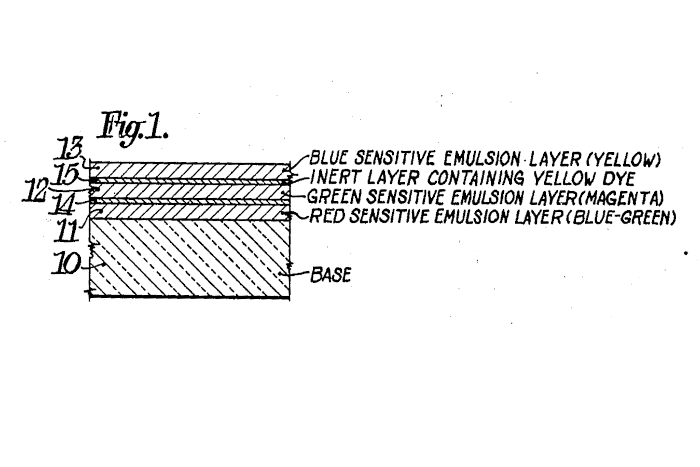
C-print stands for chromogenic print — a light-sensitive photographic process based on chemical color development. The base material is photographic paper with three stacked emulsion layers, each responsive to one of the primary color ranges cyan, magenta, and yellow. Exposure followed by chemical development produces dyes within these layers — the result is a continuous tonal rendering free of halftone dots, typical of classical photography.
C-prints are also referred to as Lambda prints, or LightJet prints — depending on the output device and manufacturer. All of these terms describe the same underlying process.
How a C-Print Is Made
Traditionally, a C-print was produced by exposing photographic paper with an enlarged negative. Today, digital output dominates: rather than a negative, laser or LED light sources expose the image directly onto the light-sensitive paper. The chemical development — typically the so-called RA-4 process — remains the same.
Among the best-known output devices for digital C-prints are Lambda (Durst), LightJet (Océ), and Chromira. Although the input file is digital, the result is a classic photographic print — with all the properties and aging characteristics that come with it.
Photographic papers for C-prints are offered by, among others, Fujifilm (Crystal Archive), Kodak (Endura), and Ilford. The choice of paper significantly affects color rendering, surface, and long-term stability.
C-Print vs. Fine Art Print: The Key Difference
The term “fine art print” today usually refers to pigment inkjet prints — a fundamentally different process. The distinction matters because the two processes bring different properties:
C-Print
Fine Art Inkjet-Print
Color formation
Chemical dyes
Pigment inks on a substrate
Structure
Continuous tone, no halftone dots
Ink droplets (barely visible at high resolution)
Surface
glossy, lustre or matt
Wide range — from matte to baryta
Long-term stability
Depends on paper and storage, generally prone to fading
Very high with pigment inks and archival papers
Color gamut
High, especially in midtones and saturation
High, very precisely controllable with an ICC profile
For collections, this difference matters because C-prints — depending on age, storage, and paper type — are exposed to specific risks that are less pronounced in modern pigment prints.
How C-Prints Age — and Why It Happens Unevenly
The central conservation problem with C-prints is dye fading. The three dye layers (cyan, magenta, yellow) differ chemically in stability and break down at different rates when exposed to light and humidity.
The result is not uniform fading but a color shift: an image that originally appeared neutral can develop a magenta or yellow cast over time, because the cyan layer degrades faster than the others.
This process is accelerated by, among other things:
Light exposure — UV content and duration of illumination are decisive
Temperature and humidity — warm, humid storage significantly accelerates decay
Paper type — different manufacturers show markedly different stability values
poor workmanship
In dark storage under controlled climate conditions, C-prints can remain stable for decades. Under exhibition conditions, decay can become visible within a few years.
What matters is this: once a color shift has begun, there is no reliable reference left for how the image originally looked — unless one was documented beforehand.
Digitization as Condition Documentation
This is precisely where the conservational significance of proper digitization lies.
A C-print digitized today with a reference-scan leaves behind a measurable condition record of its current appearance — including color values that can be captured with a spectrophotometer and embedded in the file.
Read more about our Reference Scan in the linked article.
This documentation serves several purposes:
Condition comparison: Later digitizations can be compared to the first to objectively track color changes — not based on subjective memory, but on Delta-E values. Read more about color spaces in the linked article.
Basis for reproduction: Should a C-print later be reproduced or reprinted, the color-accurate digitization provides the baseline for a print that matches the original as it appeared at the time of digitization.
Insurance and loans: For valuable works, unbroken condition documentation is a prerequisite for loans and insurance contracts.
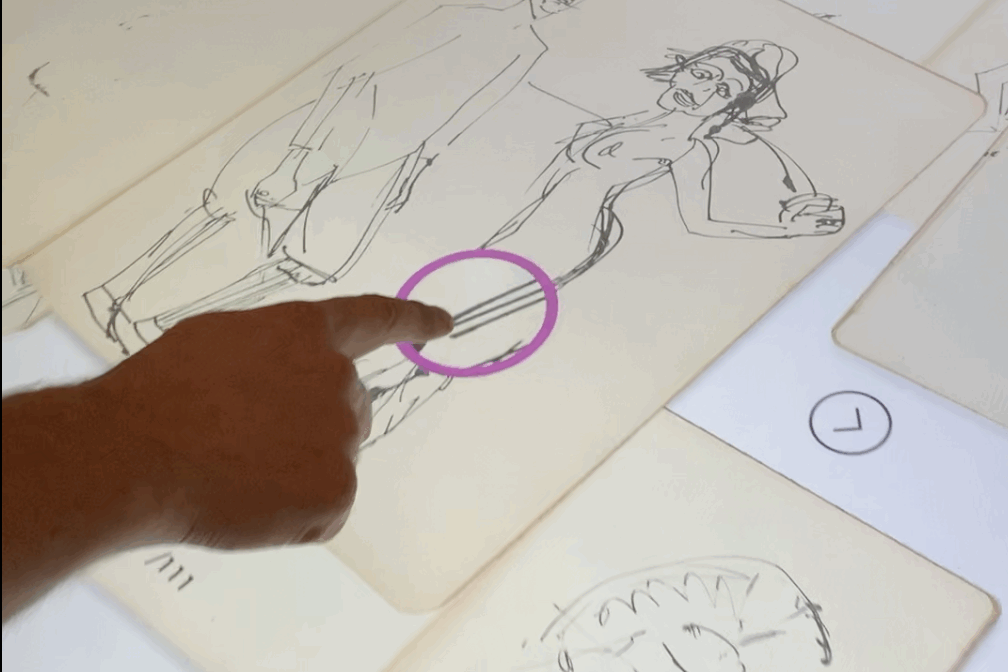
When digitizing C-prints, it is crucial to work without touching them: Direct contact with the surface can cause damage to the emulsion layer, which can be costly to repair.
Conclusion
The C-print is a photographic process with specific strengths and specific risks. Anyone holding, exhibiting, or reproducing C-prints in a collection should understand their aging behavior — and act before a color shift sets in.
Proper digitization with color measurement provides the only reliable basis for later comparison, reproduction, and conservation.
Would you like C-prints from your collection digitized properly? Get in touch.